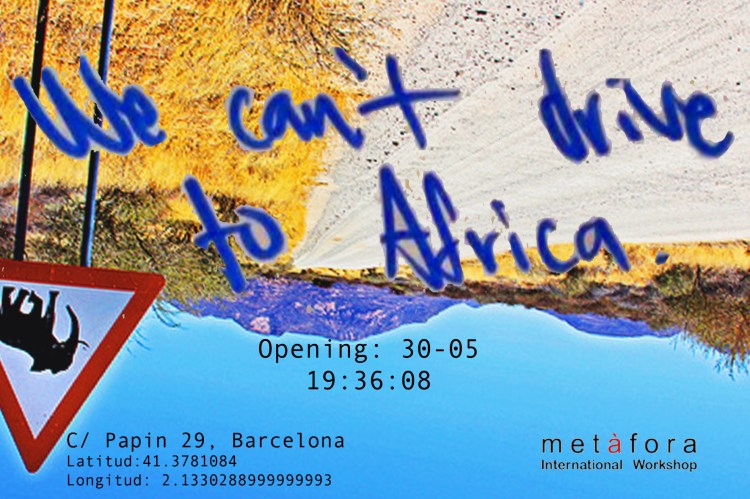
You are invited to come!
You are invited to come!
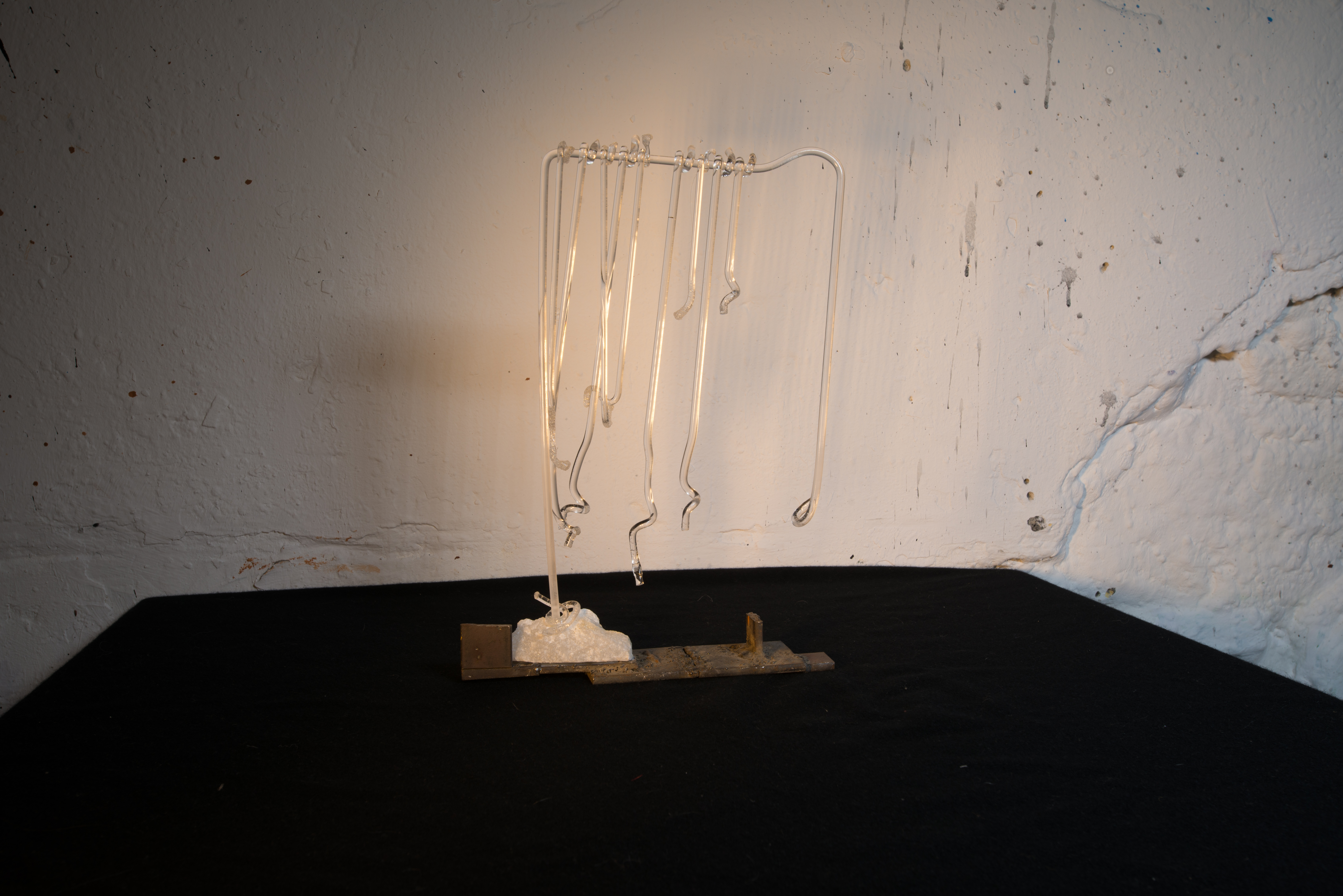
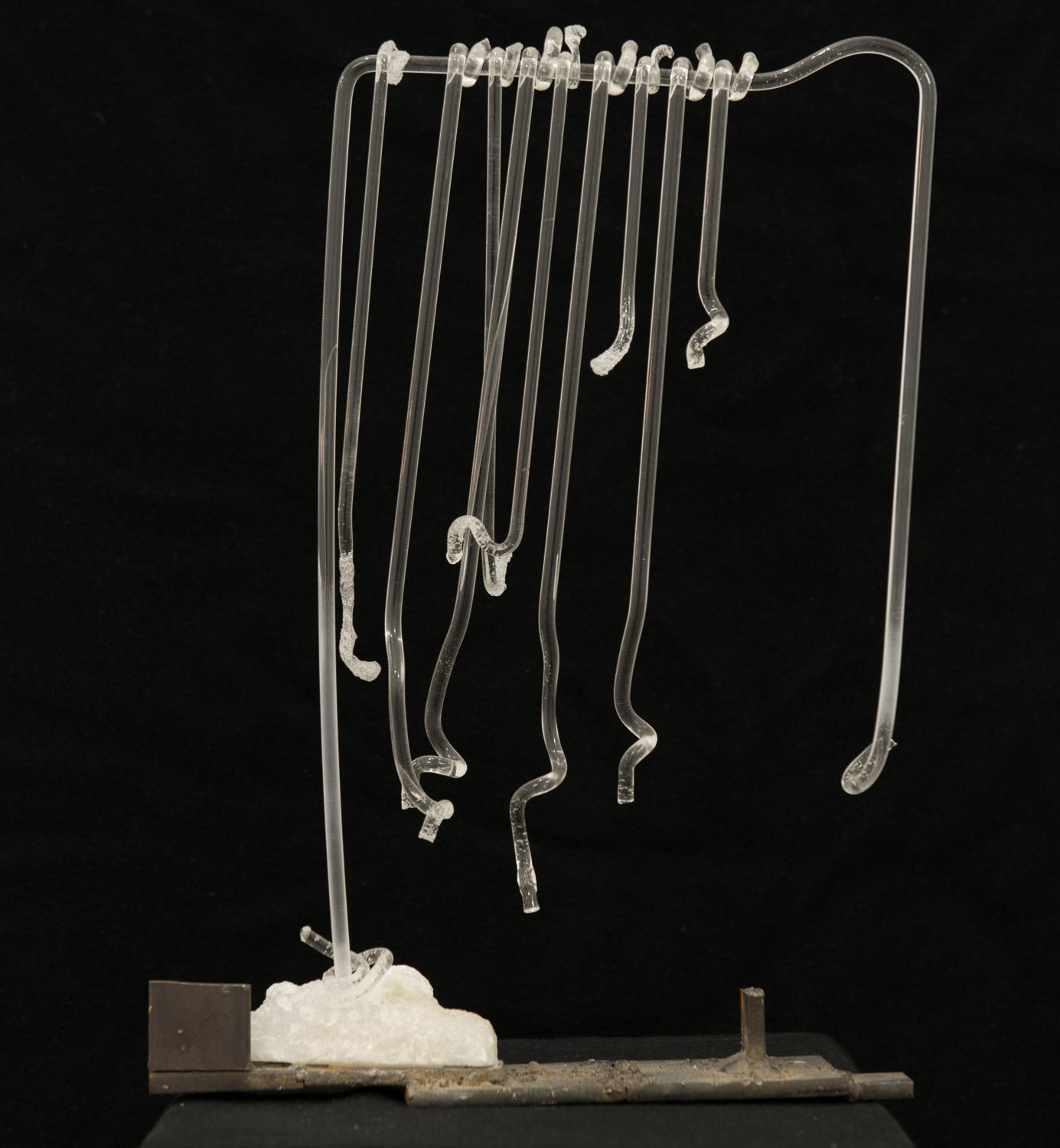
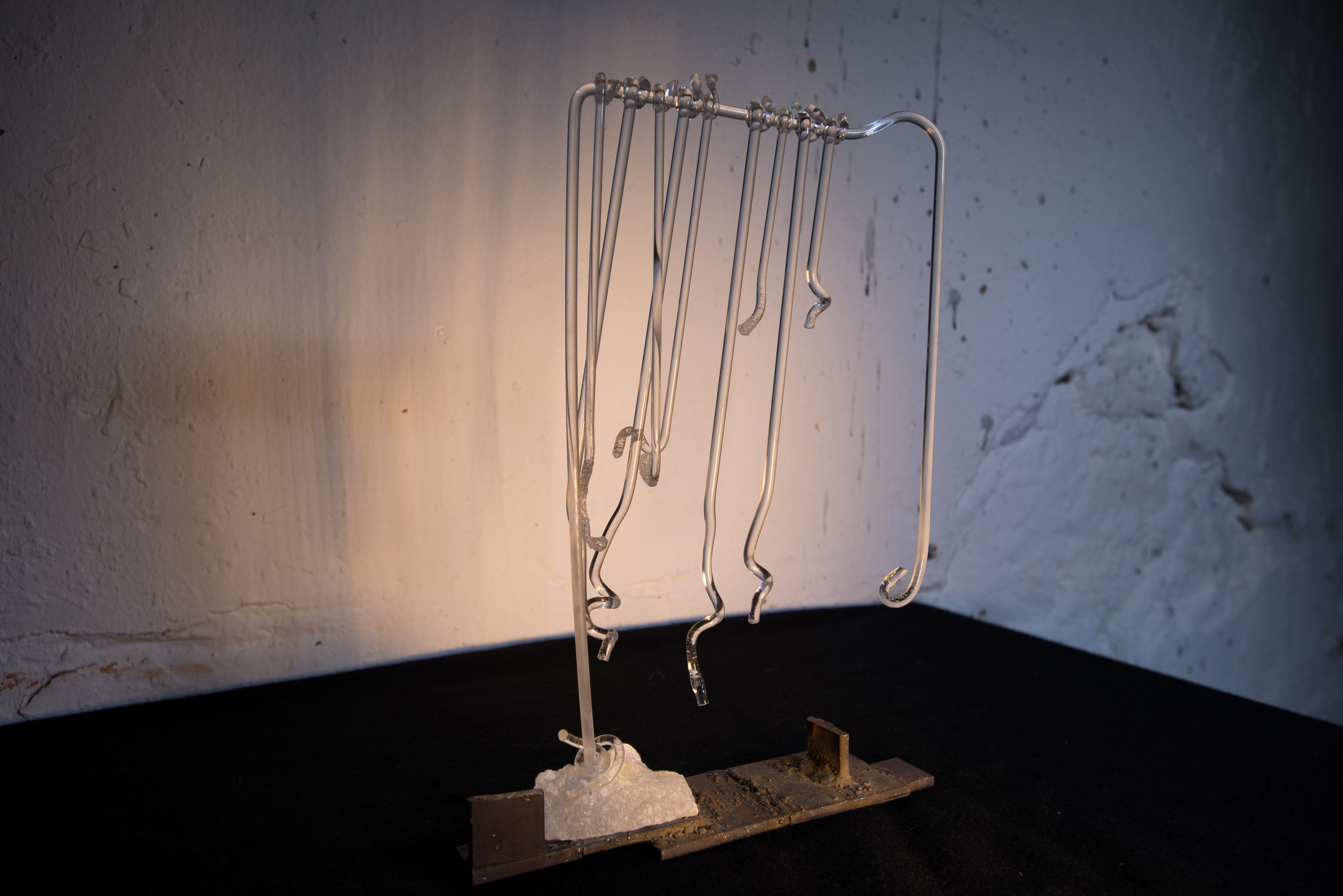
When walking through the villages in the Catalonian mountains in summertime one notices airy, see through chains of plastic, strings of beads or little pearls waving in the wind. These “fly curtains” are hanging in the doors of all the small shops- the baker, the butcher, the cheese shop. The vegetable and fruit shop, which sells the owners own produce from the garden and mushrooms gathered in the nearby forest.
How long will they still be there? Will they survive or will they in time give way to big city supermarkets with automatic doors and air-condition?
The transparency and brittleness of the methacrylate suggests their vulnerability, the fragility of their existence. The recycled metal speaks of antiquity and the alabaster tells of the crispiness of the countryside where it was found.
Methacrylate, alabaster, recycled metal (33x23x6cm)

A female figure is gently swaying in the wind. Is she growing upwards from her roots? Or is she held back by them?
Roots are considered the most important thing in my culture. Your country, your history, your house. You are not supposed to leave them. But what about freedom, growth and transformation?
She is wearing the collar of a Presbyterian pastor, which is a tension in itself: Presbyterians were among the first to fight for women’s rights and the right to vote; yet they also gave fundamentalism its name.
The collar of a female pastor could be the sign of change towards openness and transformation.
Women’s ordination is still denied in many countries (or even taken back as in the case of Latvian Lutheran church). Not to mention huge and important denominations such as Roman Catholic and the Orthodox churches who do not ordain women at all. The situation in other world religions is mostly not much better.
Ursula Glienecke
wire, chicken wire, wood (2,30m)

 searching...meaning